Emerging food brands
Learn what is required, what matters in a working cafeteria, and how to prepare for a local evaluation without assuming an outcome.

A practical guide to nutrition fit, district purchasing, in-context trials, student feedback, and repeatable service.
Understand current nutrition and meal-pattern requirements.
Navigate district-specific competitive purchasing processes.
Evaluate the product in local schools and kitchens.
Confirm line and tray fit, prep, storage, and staffing needs.
Gather feedback and use it reliably on future menus.
Requirements and purchasing processes vary. Confirm current guidance with USDA, your state agency, and the local school food authority.
Built for real school food
Learn what is required, what matters in a working cafeteria, and how to prepare for a local evaluation without assuming an outcome.
Use clear context to evaluate products, run fair trials when useful, and choose what works for your students and operation.
Design for the operation
A useful evaluation looks at the meal, the purchasing process, the kitchen, the line, and the students together.
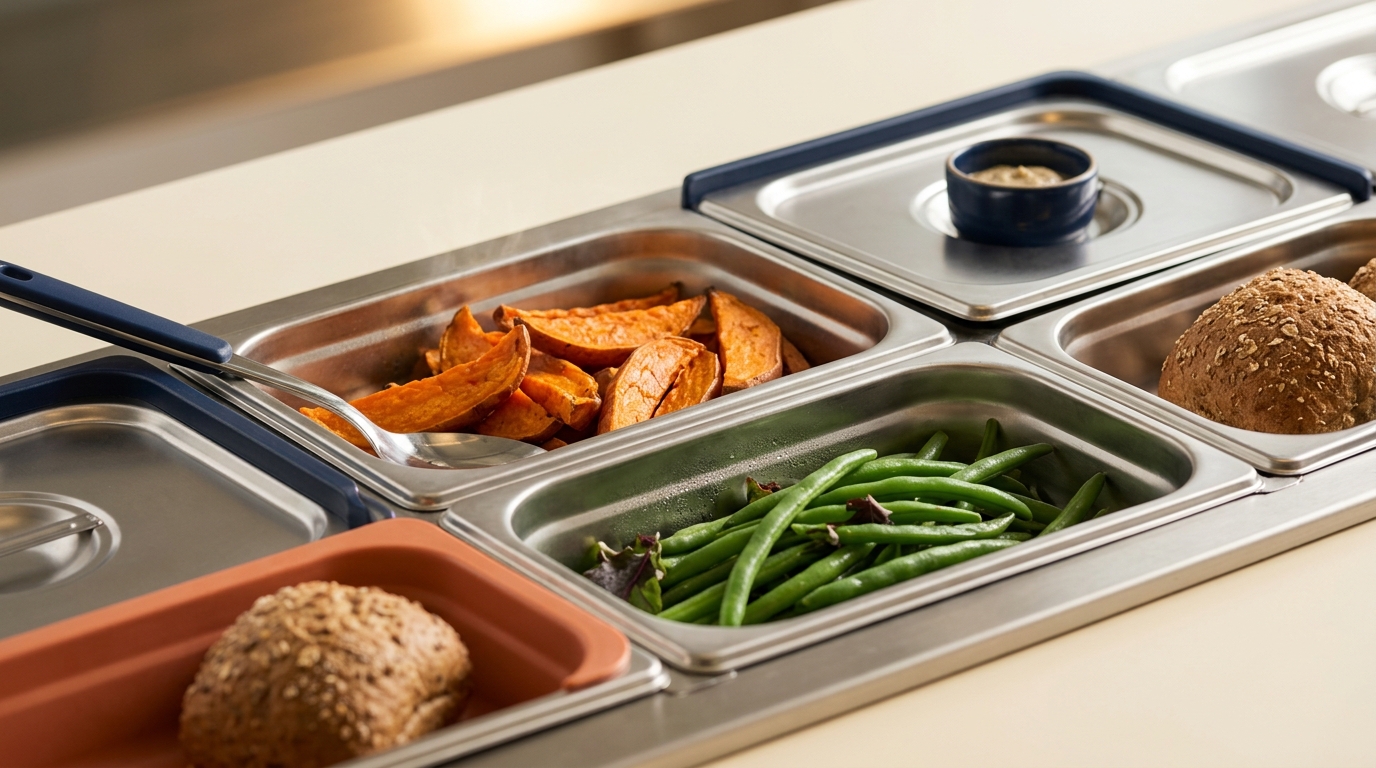
Use the real line
Review documentation, delivery, storage, preparation, and portion instructions.
Watch speed, hold quality, utensil fit, portion control, and tray placement.
Gather student input, staff observations, and waste signals without treating one trial as a guarantee.
The full pathway
Start with the current program standards and identify how the product may contribute to a reimbursable meal. Accurate documentation supports review; it is not a national approval.
Learn how the local school food authority buys, which method fits the expected purchase, and what the solicitation or quote process requires.
When a district uses samples or taste tests, define what the team needs to learn: preparation, portioning, student response, and fit with the full meal.
A product has to work at service speed. Check storage, equipment, labor, portion control, hold time, food safety, and the physical tray.
Student response, waste observations, staff notes, product consistency, and supply continuity can inform the next local menu decision.
Start with public guidance
Federal resources establish important program and procurement context. State agencies and local school food authorities determine how that context applies to a specific purchase and menu.
Keep the first conversation practical
SchoolCafeterias.org is an educational starting point, not a purchasing authority, certification body, or guarantee of district access.
Contact the editorial team